Jessica Lange Reflects on a Half-Century Career and the Definitive Role of Her Lifetime

The landscape of Hollywood is often defined by its relentless pursuit of the new, yet for legendary actress Jessica Lange, the focus has shifted toward the profound weight of legacy and the art of the perfect exit. During a recent appearance at the Virginia Film Festival, where she was honored with the prestigious Visionary Award, the 77-year-old icon engaged in an intimate discussion for The Hollywood Reporter’s Awards Chatter podcast. Amidst the accolades and the celebration of her career, Lange offered a candid perspective on the inevitable transition of age, noting, "You age out of a lot of parts; that’s just the nature of things."
Lange, whose career spans five decades, has spent much of the last decade championing a project that she considers the culmination of her artistic journey: a film adaptation of Eugene O’Neill’s masterpiece, Long Day’s Journey Into Night. For the actress, who has already secured the "triple crown of acting"—an Oscar, an Emmy, and a Tony—the prospect of closing her career on the role of Mary Tyrone is not a melancholic ending, but a triumphant one. "I wouldn’t mind ending on Mary Tyrone, let me tell you," she remarked. "I would embrace that, because there’s no greater part I’m ever going to play."

From King Kong to Critical Acclaim: A Chronology of Resilience
The trajectory of Jessica Lange’s career is a study in perseverance. Her professional origin story is famously rooted in the 1976 remake of King Kong. Discovered while working as a model, Lange was thrust into the international spotlight with a massive promotional campaign that included a cover feature on TIME magazine. However, the film was a critical failure, and the backlash was immediate and brutal. The experience was a formative, if traumatic, lesson in the volatility of the industry.
"It shattered my self-confidence," Lange has noted, reflecting on that period. The narrative of her subsequent rise is a testament to her technical evolution. She pivoted from the blockbuster failures of her early days to a string of nuanced performances that established her as a titan of the craft. Her professional timeline serves as a roadmap of 20th-century cinema excellence:
- 1979: A supporting turn in Bob Fosse’s All That Jazz signaled a return to critical favor.
- 1982: A landmark year featuring performances in The Postman Always Rings Twice and Frances, the latter earning her an Academy Award nomination. That same year, her work in Sydney Pollack’s Tootsie earned her the Oscar for Best Supporting Actress.
- 1994: Her second Academy Award win for her leading role in Blue Sky solidified her status as a powerhouse lead actress.
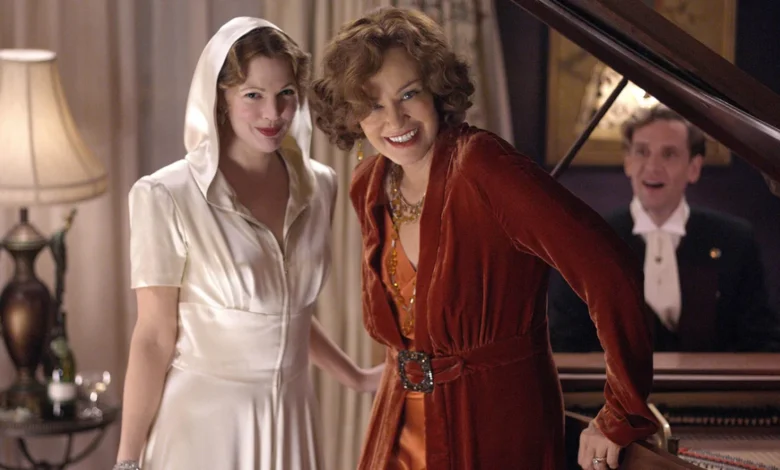
- 2009–2017: A resurgence in television via HBO’s Grey Gardens and her prolific collaboration with producer Ryan Murphy on American Horror Story and Feud: Bette and Joan, yielding multiple Emmy Awards.
The Triple Crown: Statistical Rarity
Jessica Lange stands as one of only 24 individuals in history to have achieved the "triple crown of acting." This rare designation requires winning at least one competitive Oscar (film), Emmy (television), and Tony (theater). Currently, only 10 individuals holding this distinction remain living, placing Lange in an elite echelon of performers.

Her accolades are not merely representative of longevity but of sustained excellence across disparate mediums. With two Academy Awards, three Emmy Awards, and one Tony Award, Lange has successfully navigated the shift from the Golden Age of film to the "Peak TV" era. This versatility has allowed her to maintain relevance in an industry that notoriously marginalizes aging women, a challenge she addresses with the pragmatic clarity of someone who has observed the shifting tides of the industry from the inside.
The Long Road to Long Day’s Journey Into Night
The production of the latest film adaptation of Long Day’s Journey Into Night serves as a microcosm of Lange’s tenacity. Having played the role of the morphine-addicted matriarch Mary Tyrone on the London stage in 2000—earning an Olivier Award nomination—and later on Broadway in 2016, where she secured a Tony Award, the project became a personal mission.
The road to the screen was fraught with the kind of logistical instability that often kills independent projects. Financing was secured and lost on multiple occasions, with production schedules faltering even after cast and crew had arrived on location in Ireland. Collaborating with writer David Lindsay-Abaire and director Jonathan Kent, Lange remained the project’s constant anchor. The resulting film, which is currently making the rounds at film festivals, represents a deeply personal achievement for the actress. It is a project she has fought for, not for commercial gain, but for the completion of a creative circle that began over twenty years ago.

The Industry Perspective and Professional Implications
Lange’s recent activities underscore a defiance of traditional retirement models in Hollywood. Beyond the release of her film, she recently returned to the American Horror Story anthology for its 13th season, which concluded in late October. Her presence in the current awards conversation—with potential nominations for both Oscar and Emmy consideration—highlights a broader trend in the industry: the elevation of veteran performers who bring a level of gravitas that younger generations are currently seeking to emulate.
From an industry analysis perspective, Lange’s longevity is bolstered by her ability to bridge the gap between traditional prestige cinema and the streaming-driven anthology format. By aligning herself with creators like Ryan Murphy, she successfully tapped into a younger demographic without compromising the intensity of her performances.
The "mid-career malaise" she described experiencing in her forties—a period where roles became less frequent and less satisfying—is a common narrative for many actresses of her generation. However, her ability to break out of that period through the medium of television serves as a blueprint for contemporary performers. Her career suggests that the "aging out" process is not a termination of talent, but a transition of medium and focus.

The Visionary Legacy
As she accepts honors like the Visionary Award at the Virginia Film Festival, the conversation surrounding Jessica Lange is increasingly centered on her role as a custodian of the craft. She is no longer just an actress; she is a historical touchstone for the evolution of performance art in America.
Her commitment to the role of Mary Tyrone is telling. It is a role defined by struggle, addiction, and the disintegration of the American family unit—themes that require the kind of emotional vulnerability that only decades of life experience can provide. By choosing to potentially end her professional career on this specific note, Lange is asserting control over her narrative.
As of now, the actress shows no signs of an immediate withdrawal from the public eye. She continues to engage with the distribution of her work and remains active in the creative processes that define her legacy. Whether or not this film becomes the final chapter of her storied career, Jessica Lange has already secured her position as one of the most enduring figures in the history of the performing arts. Her journey from the perceived failure of a monster movie in 1976 to the triumphant, self-directed artistic conclusion of her choice in 2026 remains one of the most compelling arcs in modern entertainment.